Solutions · Data Centers · AI Data Centers
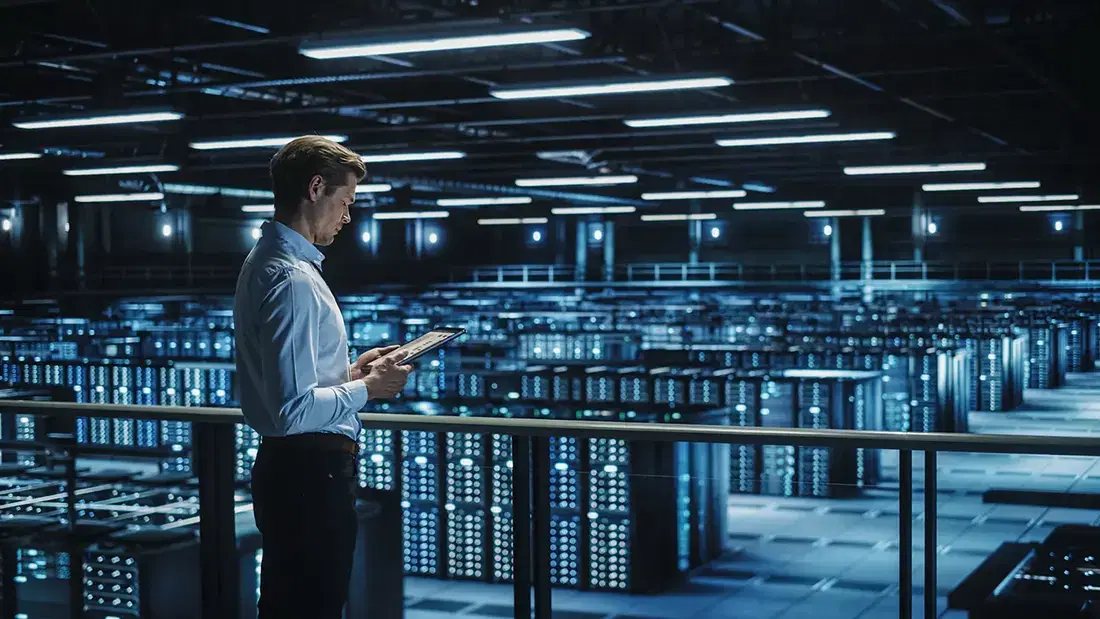
AI Is Creating a New Power Problem
AI workloads can jump from idle to full power in seconds, putting stress on your equipment and the grid. TeraStor smooths out those spikes and keeps your data center running, even when the grid can not.
WHY TERASTOR
Built to Handle AI Power Swings
AI infrastructure is growing faster than power infrastructure can be built. Data center operators increasingly have to manage limited grid capacity, high density compute loads, resilience requirements and much larger energy needs. TeraStor is developing energy storage hardware and software for this environment.
Campus-Scale BESS
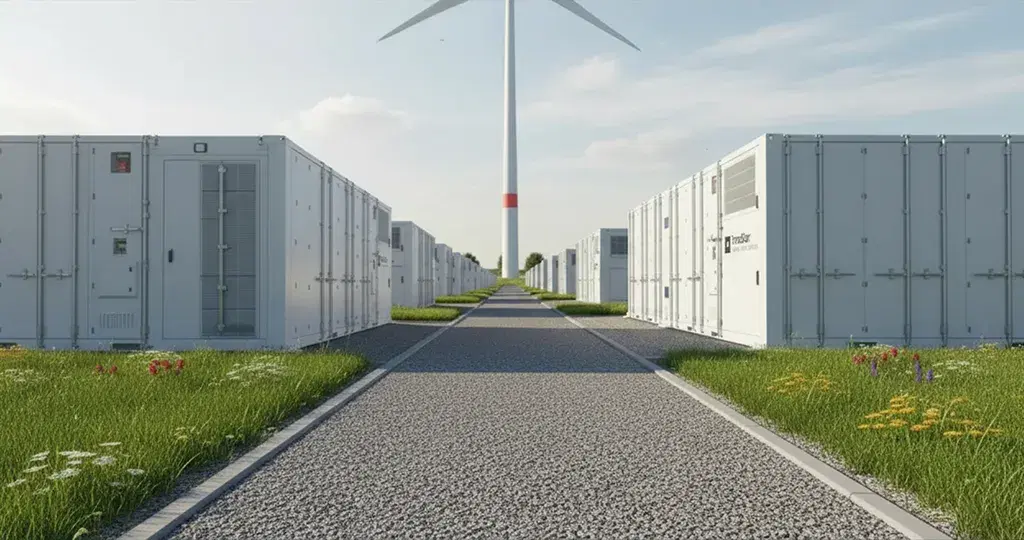
Large battery systems can help data center campuses manage peak demand, improve utilization of available grid capacity, integrate onsite generation and provide additional resilience. TeraStor’s P Series provides the large scale storage platform.
A Flat Line at the Meter
AI training can push a data hall from idle to full power in seconds. TeraStor absorbs those swings on site, protecting your transformers and switchgear and keeping your load within utility limits.
Storage Closer to Compute
As compute density grows, storage belongs closer to the load. TeraStor is developing distributed battery systems for the campus, building, row and potentially rack level. The goal is not just backup power, but better coordination between compute demand and the electrical infrastructure behind it.
Recommended Hardware
From the Pad to the GPU Row
The P8000 carries campus-scale load and holds it through grid failure; End of Row cabinets smooth power spikes right at the GPU rows.
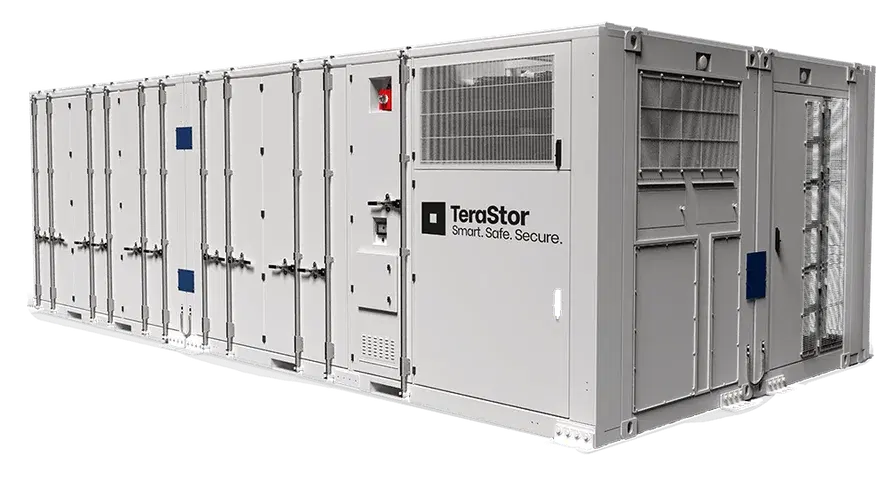
TeraStor P8000
8.2 MWh dischargeable in a self-contained outdoor enclosure — the flagship, built on Parallel-before-Series architecture.
- Highest capacity per enclosure — fewer units for campus-scale load
- Rides through grid sags and outages on stored energy — hours, not UPS minutes
- Parallel-before-Series architecture isolates faults at the individual cell level
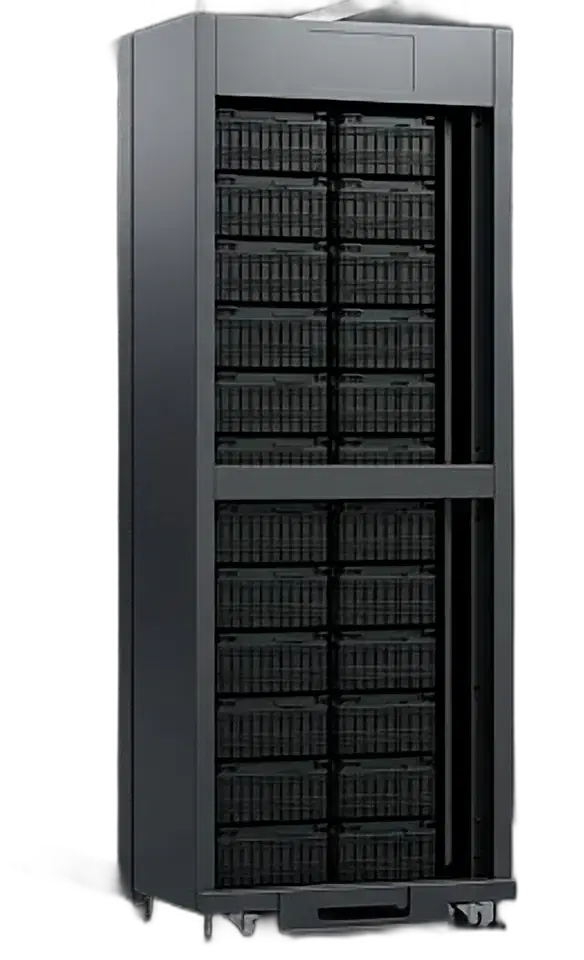
Concept visualization — not final mechanical design
TeraStor EoR
Coming SoonRack-sized battery cabinets installed at each end of a GPU row. They absorb the row’s power spikes right where they happen, so the building’s wiring and the utility see a smooth, steady draw.
- In our reference architecture, avoided centralized UPS infrastructure can offset the cost of the EoR system.
- With peaks absorbed at the row, the same interconnect and switchgear carry about 1.3 times the GPUs.
- Day-to-day operation is simpler than a UPS: no service contracts, no battery replacements, no monthly transfer tests. If something fails, it affects a single row rather than the whole site.
SOFTWARE
Software That Keeps Up With AI Workloads
AI workloads change power draw in seconds. StorOS watches every swing and tells your battery when to absorb, hold or release energy.
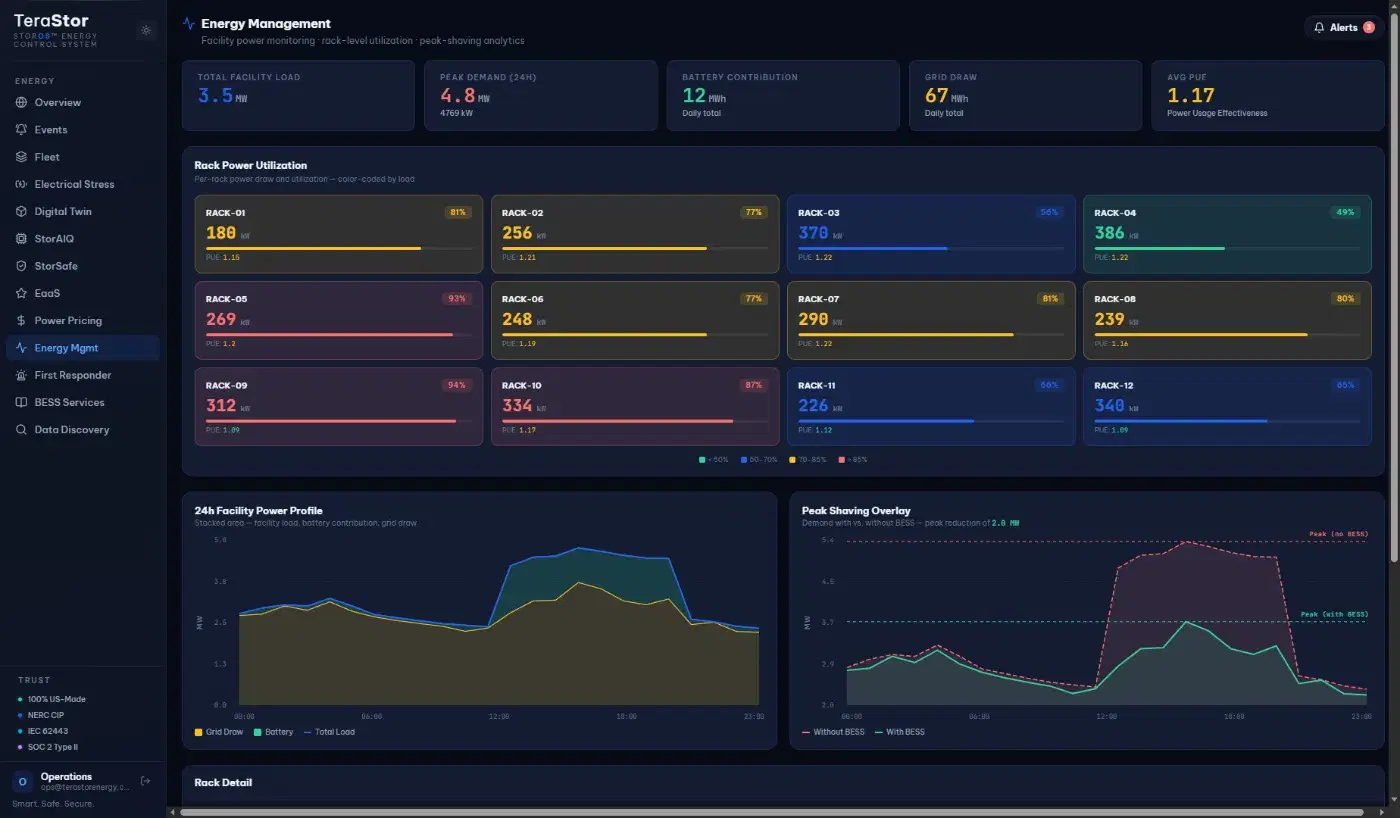
Smooth Power Swings
Absorb sudden spikes and drops so the grid sees a steady load.
Stay Within Utility Limits
Keep your facility’s draw inside the limits your utility sets.
Stay Resilient
Keep reserve capacity ready so compute stays on when the grid does not.
Kinetra Software
From Power Systems to the Whole Floor
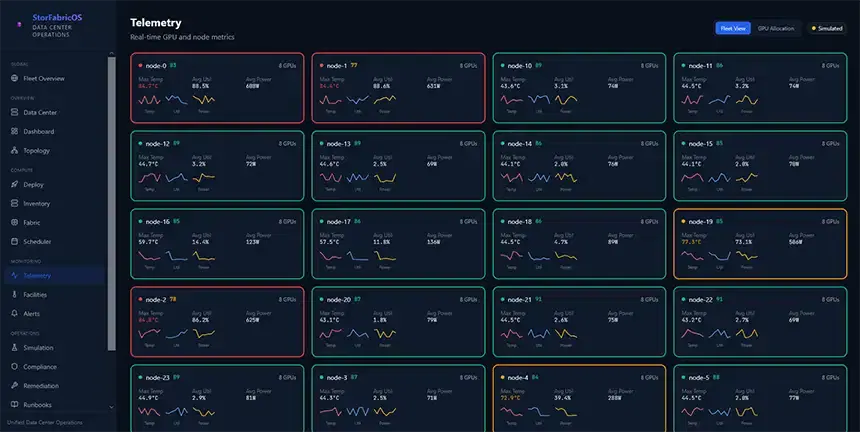
Kinetra extends the TeraStor software strategy into AI infrastructure by connecting information from compute workloads, facility systems and energy assets. The long-term objective is to help operators understand not only how much power is being consumed, but why it is being consumed and how energy infrastructure can respond.
See
See your entire facility in one connected view, from racks and GPUs to cooling, power and the jobs running on them. Alerts, tickets, runbooks and tenant billing all live in the same place.
Decide
Kinetra connects the dots across your facility, predicts power and cooling issues before they happen, and weighs the cost of each option. It recommends what to do next but never takes action on its own.
Act
This is the only part of Kinetra that can make changes. Every action is checked against safety rules, approved by the right person and recorded in a log that cannot be altered.
Built With Partners
The architecture of AI data centers is changing quickly. We do not believe one company will solve the entire problem.
TeraStor is working with data center operators, power infrastructure companies and technology partners to develop and validate these solutions.
Working With TeraStor
How an Engagement Runs
Site Review
Share a one-line diagram and interval load data. We return a site-specific model of stabilization, ride-through and upkeep savings.
Single-Unit Pilot
A short letter agreement puts one TeraStor unit on site — commissioned and reporting within weeks.
Scale on Evidence
StorOS reports verified smoothing, availability and savings from day one — the basis for a broader rollout.
Get in Touch
AI workloads can swing from idle to full power in seconds. Tell us about your site, and we will show you how TeraStor storage and software can smooth those swings, protect your equipment and keep you within utility limits.