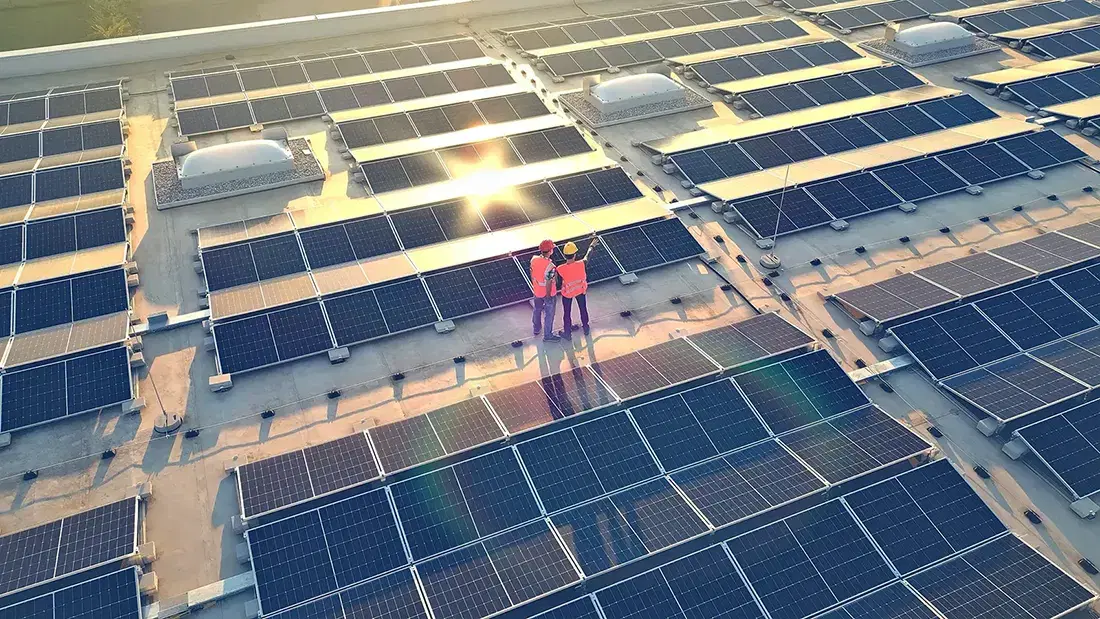
Solutions · Utilities
Storage Designed for the Grid
TeraStor provides utility-scale and distributed BESS for utilities, IPPs and project developers — supporting capacity, energy shifting, renewable integration, ancillary services and grid relief.
Built for Large-Scale Deployment
Utility projects require more than battery cells. System architecture, safety, controls, PCS integration, transformers, commissioning, long-term service and project economics all need to work together. TeraStor works with customers and project partners across the complete BESS architecture.
High Energy Density
Our P Series is designed to put more storage into each enclosure, reducing the number of battery units required for large projects.
System-Level Controls
StorOS provides visibility and control from individual systems through multi-site fleets.
Flexible Integration
We work with qualified PCS, transformer and balance-of-plant partners to configure the system for the project and market.
Regional Supply Chains
TeraStor is developing manufacturing and supply-chain options across the United States, Europe and Asia to support regional project requirements.
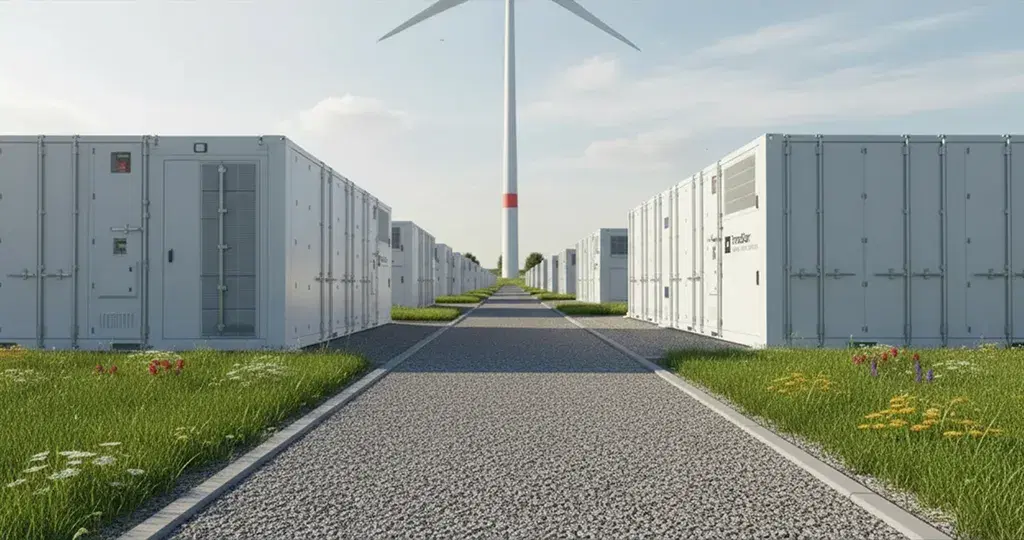
WHY TERASTOR
Why This Matters to the Grid
TeraStor systems can support energy shifting, capacity, renewable integration, ancillary services, congestion management and other grid applications. StorOS provides the monitoring, control and fleet-management layer across the system.
Feeder and Substation Relief
Each unit lowers customer demand on your distribution system during peak hours, helping you defer costly grid upgrades.
Behind the Meter
Behind the meter systems can often be deployed without a traditional generation interconnection process, depending on local utility and market requirements.
Telemetry You Can Plan On
StorOS reports real-time dispatch, demand and uptime data for every unit. Through a utility partnership, that data can also support load forecasting and grid planning.
Recommended Hardware
A Fleet of Enclosures, One Flagship
S4000 units carry the distributed program; the P8000 is the path to utility-scale capacity.
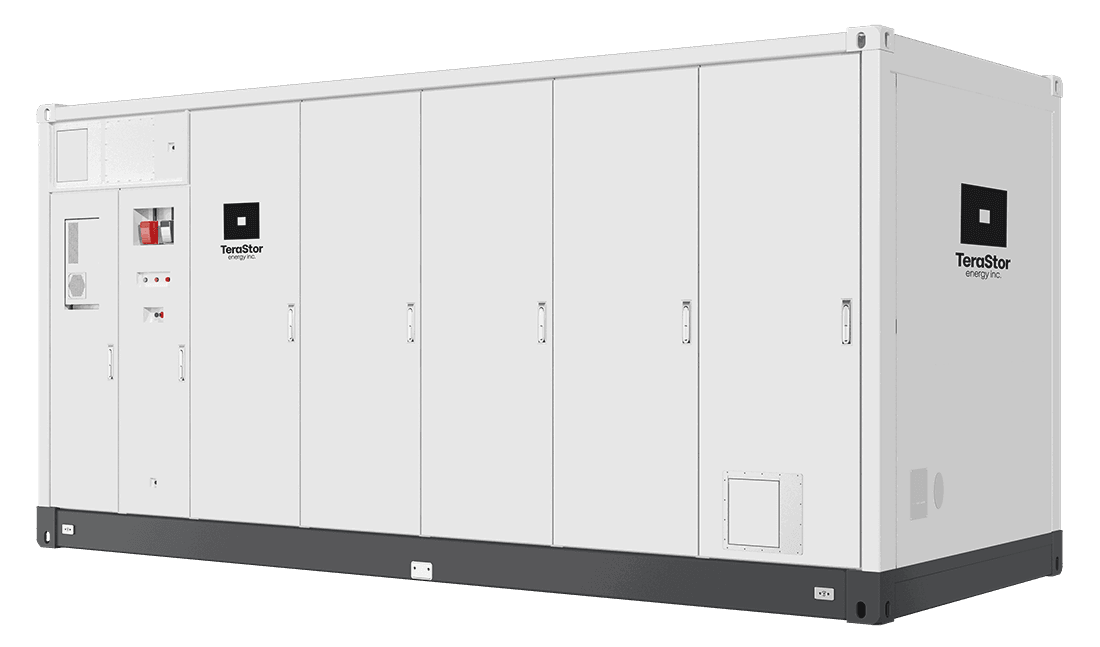
TeraStor S4000
The workhorse of the distributed fleet — 4.07 MWh dischargeable per unit, deployed behind the meter at customer sites across your territory.
- Deployed behind the meter at the customer's existing service
- No new generation-interconnection application in program scope
- Customer-side peak shaving, dispatched by StorOS
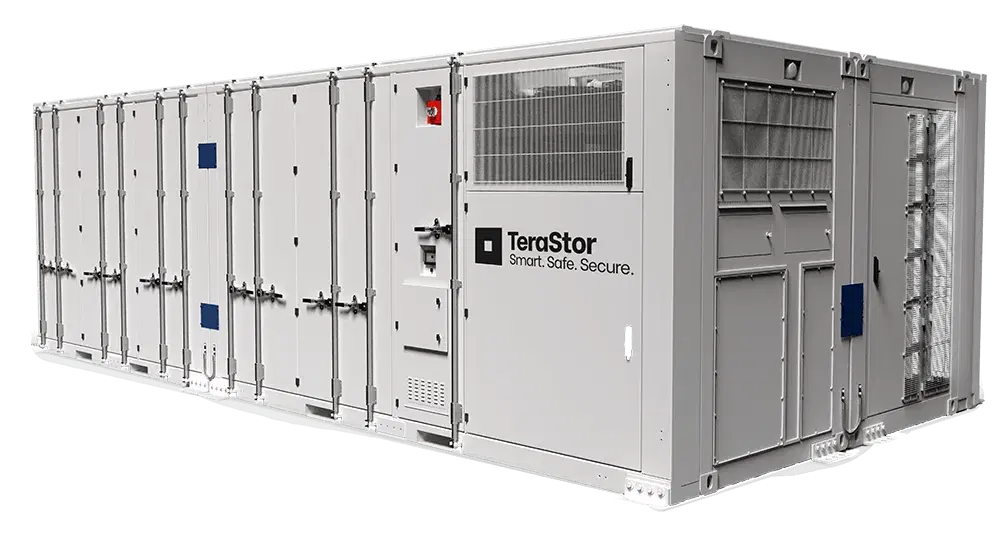
TeraStor P8000
The flagship for utility-scale programs — 8.2 MWh on Parallel-before-Series architecture, for when the partnership grows past the meter.
- 8.2 MWh per enclosure for substation-adjacent capacity
- Parallel-before-Series architecture isolates faults at the cell level
- A path from distributed pilot to grid-scale deployment
STOROS™ SOFTWARE
Visibility Down to the Unit
StorOS gives your grid-planning team a live view of every deployed unit, with per-unit telemetry across your whole territory.
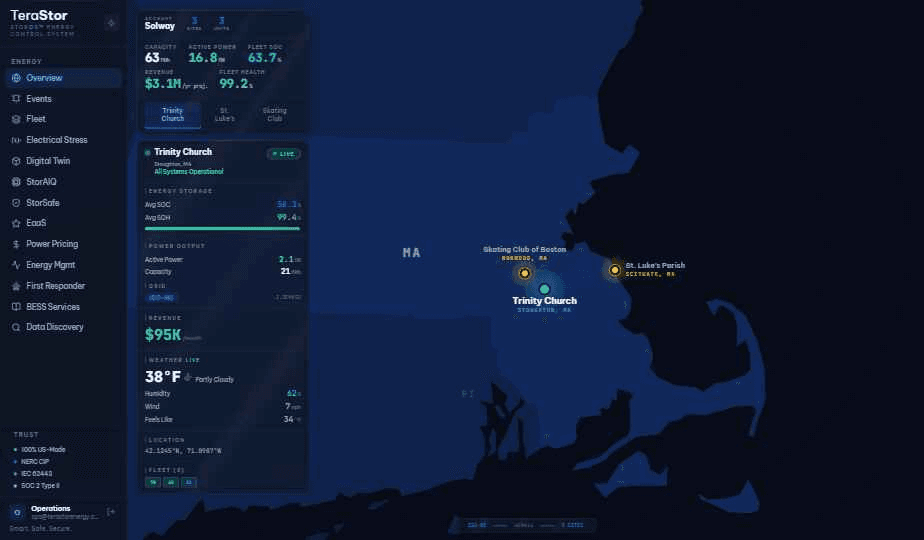
See the Whole Fleet
Every site is mapped with live status, capacity, active power and local grid conditions.
Track Every Unit
Health, charge level, power output and dispatch role are reported for each enclosure.
Act on Alerts Fast
System alerts and operator actions share one log, so issues are spotted and resolved quickly.
Distributed Storage and Virtual Power Plants
TeraStor also supports distributed energy storage programs where multiple systems are deployed across commercial or community sites and managed as a coordinated fleet.
These systems can provide customer-side value while also supporting grid programs where market rules allow.
This is an additional deployment model, not the definition of our utility business.
Working With TeraStor
For Distributed Utility Programs
Program Scoping
Identify constrained circuits or customer segments where peak relief carries the highest grid value.
Pilot Cohort
A small set of customer sites deploys TeraStor units; dispatch and demand-impact data is shared with your planning team.
Program Design
Verified peak-relief data informs a broader DER or VPP program structure and any future aggregation pathway.
Start With the Project
Send us the project size, location, target COD and application. We can help determine the appropriate system architecture and next steps.